Hello!

My name is Mithi Alexa (Mia) de los Reyes (she/her/hers).

I am an Assistant Professor of Astronomy at Amherst College. As an observational astronomer, I use low-mass galaxies in the nearby universe to answer the question: "Where did we come from?"

When I'm not doing research, I enjoy rock climbing, doing aerial silks, and eating baked goods.

Download my CV

Research

I use multi-wavelength observations of nearby galaxies to understand how they form and evolve.
Below is a subset of my publication list. You can find a full list here:  ADS

Selected first-author publications

  • de los Reyes, M.A., Asali, Y., Wechsler, R.H., Geha, M., Mao, Y.-Y., Kado-Fong, E., Pucha, R., Grant, W., Gandhi, P.J., Manwadkar, V., Engelhardt, A., Munshi, F., Wang, Y. (2025) Stellar Mass Calibrations for Local Low-mass Galaxies., ApJ, 989, 91, doi:10.3847/1538-4357/ade4c5
  • de los Reyes, M.A., Kirby, E.N., Zhuang, Z., Steidel, C.C., Chen, Y., Wheeler, C. (2023) Dwarfs In Void Environments (DIVE): The Stellar Kinematics of Void Dwarf Galaxies Using KCWI., ApJ, 951, 52, doi:10.3847/1538-4357/acd189
  • de los Reyes, M.A., Kirby, E.N., Ji, A.P., Nuñez, E.H. (2021) Simultaneous Constraints on the Star Formation History and Nucleosynthesis of Sculptor dSph, ApJ, 925, 66, doi:10.3847/1538-4357/ac332b
  • de los Reyes, M.A., Kirby, E.N., Seitenzahl, I.R., Shen, K.J. (2020) Manganese Indicates a Transition from Sub- to Near-Chandrasekhar Type Ia Supernovae in Dwarf Galaxies, ApJ, 891, 85, doi:10.3847/1538-4357/ab736f
  • de los Reyes, M.A., Kennicutt, R.C. (2019) Revisiting the Integrated Star Formation Law. Paper I: Non-Starbursting Galaxies, ApJ, 872, 16, doi:10.3847/1538-4357/aafa82

Current research

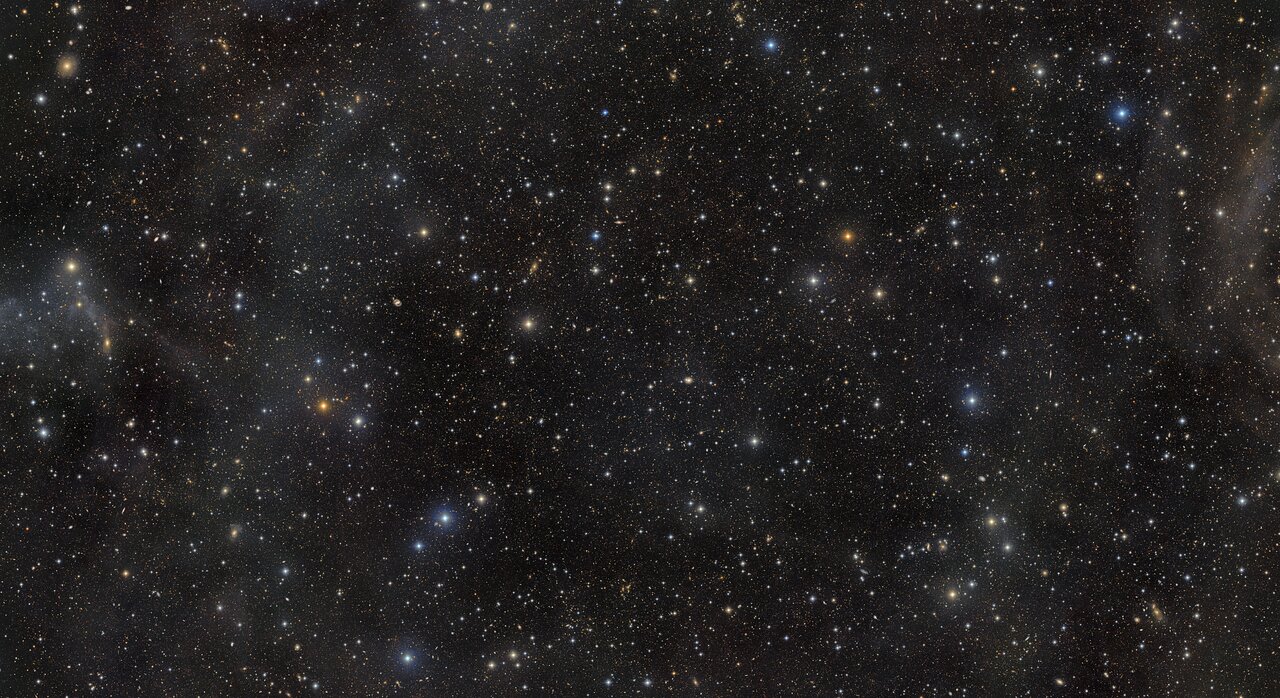
Detailed image of a field of galaxies and galaxy clusters.

Low-mass galaxies in the "big data" era

My group works to identify and characterize low-mass galaxies using next-generation surveys, like the Rubin Legacy Survey of Space and Time (LSST).

White-light image of galaxy produced from integrated field spectroscopy.

Low-mass galaxies in extreme detail

My group does follow-up studies of "interesting" subsamples of low-mass galaxies.
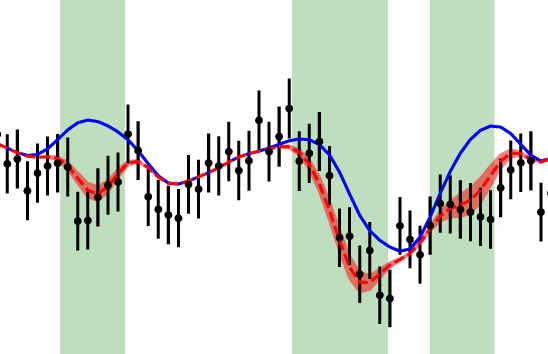
Zoomed-in portion of stellar spectrum, with models fit to the data.

Galactic archaeology

In extremely nearby low-mass galaxies, my group uses the chemical abundances of individual stars to trace both galaxy evolution and the stellar explosions that produce heavy elements.

Teaching

Although most people don't think about stars and galaxies on a day-to-day basis, I believe that astronomy is a useful (and cool!) avenue for learning "real world" critical thinking and quantitative skills. I also firmly believe that the ability to communicate about science—in as many forms as possible—is a crucial skill for everyone, and one that I aim to practice with my students. Finally, I believe that how we do science is just as important as the science itself.

Classes I have taught:

  • ASTR 200: Intro to Data Science with Astronomical Applications - A project-based introduction to Python and basic statistical analysis, with a focus on using real astronomical datasets to answer scientific questions in a quantitative way
  • ASTR 235: Intro Astrophysics - The first core course in the Amherst astrophysics major sequence, focusing on basic physical principles in astronomy (gravity, atomic physics, radiation), as well as stellar structure and evolution
  • ASTR 352: Advanced Astrophysics - The second core course in the Amherst astrophysics major sequence, focusing on galaxy structure/evolution and cosmology, with a strong focus on written and verbal science communication
  • ASTR 337: Observational Techniques - The first course in the Five College Astronomy Department astrophysics capstone sequence, in which students learn about astronomical instrumentation, data calibration and reduction techniques, and statistical methods, culminating in a final project in which they take, reduce, and do basic photometric analysis on their own science-grade data using rooftop telescopes
  • PHYS/ASTR 255: Physics and Astronomy in Sociocultural Context - A reading- and writing-intensive, discussion-based required course for Amherst physics and astronomy majors, in which students think about what physics and astronomy are, how the modern system of academic science works and how it came to be, and how physics/astronomy intersects with society today
Course materials are available upon request.

Other

Some invited public talks and other appearances

Some other things I've written

  • Astronomers Need to Rename the Magellanic Clouds: An opinion piece about whose legacies we celebrate and why.
  • Where do we go from here?: An essay about the proposed Thirty-Meter Telescope on the sacred peak of Maunakea
  • A guide to applying to astro postdocs: A two-part series (Part 1, Part 2) on applying for postdocs in astro/physics, co-authored with Dr. Luna Zagorac
  • Other Astrobites: For 5 years, I was actively involved in Astrobites, an international graduate student collaboration that publishes daily summaries of recent astro/physics papers. You can check out my posts here.

Contact Me

mdelosreyes at amherst.edu